
Tank vs. Tankless Water Heaters: Which Is Right for Your Home?
Tank vs. Tankless Water Heaters: Costs, Benefits, and What Works Best for You
When it's time to replace your water heater, you have more options than simply choosing a new version of the system you already have. Today's homeowners can choose between a traditional tank water heater and a tankless water heater, each offering different benefits depending on your home, hot water needs, and budget.
So, which one is right for your home? Let's take a closer look.
Traditional Tank Water Heaters
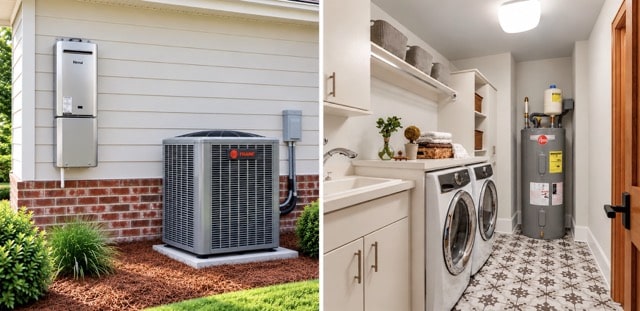
Traditional water heaters use a storage tank to hold and heat a set amount of water. When you turn on a hot water faucet, heated water travels from the tank through your plumbing system.
Benefits of a Tank Water Heater
Lower upfront cost: Traditional tank water heaters typically have a lower initial purchase and installation cost than tankless models.
Reliable hot water: A properly sized tank provides a readily available supply of hot water for everyday household needs.
Familiar technology: Tank water heaters have been used in homes for decades, making them a familiar and proven option.
Simpler replacement: If your home already has a traditional tank water heater, replacing it with a similar system may require fewer changes to your existing plumbing and installation setup.
One consideration is that the water in the tank is continually heated to maintain the desired temperature, which can result in standby energy loss.
Tankless Water Heaters
Unlike traditional systems, tankless water heaters heat water on demand. Instead of storing gallons of hot water in a tank, the unit heats water as it flows through the system.
Benefits of a Tankless Water Heater
Energy efficiency: Because water isn't continuously heated and stored, tankless systems can help reduce standby energy loss.
Continuous hot water: A properly-sized tankless water heater can provide hot water for an extended period without running out of its stored supply.
Space savings: Tankless units are compact and can be mounted on a wall, which frees up valuable floor space.
Long-term performance: With proper installation and maintenance, a tankless water heater can provide dependable performance for many years.
Tankless systems can have a higher upfront installation cost, and the system must be properly sized to meet your home's peak hot water demand.
Tank vs. Tankless: Which Is Better?
There isn't one answer that works for every home. The right water heater depends on several factors including:
- Size of your home
- How much hot water your family uses
- Your budget
- Available space
- Energy efficiency goals
- Your home's existing plumbing and electrical or gas setup
- Installation requirements
Both options have advantages, so the right choice comes down to what works best for your home. Consider your household's hot water usage, available space, energy efficiency goals, and budget when deciding between a traditional tank and a tankless water heater.
Don't Forget About Water Heater Maintenance
Whichever type of water heater you choose, regular maintenance can help support efficient, reliable operation.
Traditional tank water heaters benefit from regular flushing to help remove sediment buildup, while tankless systems may require periodic descaling, depending on water conditions and the manufacturer's recommendations.
Professional maintenance can help identify potential issues before they turn into costly repairs or need for replacement.
Need Help Choosing a Water Heater?
Replacing a water heater is an important investment in your home. A professional plumber can evaluate your current system, discuss your hot water needs, and help you determine which option makes the most sense for your home and budget.
Whether you choose a traditional tank or a tankless water heater, proper sizing and professional installation are essential for reliable performance.
When you're ready to replace your water heater, Jackson & Sons is here to help with dependable plumbing services and water heater installation. Contact our team or call (919) 636-6222 to discuss your options and find the right solution for your home.
It's one of the biggest differences between the two, and it rarely comes up until you're standing over a leaking tank in the garage. A traditional tank water heater usually gives you about 8 to 12 years before it's ready for replacement. A tankless unit, cared for properly, can run 20 years or more. The crucial element is the "cared for properly" part. Eastern NC's mineral-heavy water works against both systems, so the lifespan you actually get depends a lot on whether the unit is flushed or descaled on schedule.
Here's where the "endless hot water" promise gets misread. Tankless doesn't mean unlimited. It means the unit heats water continuously instead of emptying a stored supply, so it won't run cold mid-shower the way a drained tank will. What can trip it up is flow. If the shower, the dishwasher, and the washing machine all pull hot water at the same moment, an undersized unit can struggle to keep every fixture hot at once. Think of it like water pressure at the tap: the supply keeps coming, but only so much can move through at a time. That's why correct sizing for your household's peak demand matters more with tankless than almost anything else.
Plenty, especially if a tank already fits your home. The upfront cost is lower on both the unit and the installation, so you're spending less to get hot water flowing. It's proven technology that's kept Eastern NC homes comfortable for decades, which means parts and service are easy to come by. And if your home is already set up for a tank, replacing it is usually a straightforward swap with little change to your existing plumbing. For a lot of households, a properly-sized tank is the simple, reliable choice.
The honest answer is that it depends on your home and how much hot water you go through. Tankless units cost more to install, and there's no way around that. What you're trading for is lower standby energy loss month to month and a longer service life, which can offset the difference over the years you own it. A household of five that runs hot water all day sees that math differently than a couple in a smaller home. The best way to know which side you land on is to have your usage and setup evaluated. Give us a call at (919) 636-6222 and we'll walk you through the numbers for your specific situation.
Most of the time, yes, but it's not always a straight swap. Going tankless can mean upsizing a gas line, adding new venting, or adjusting electrical, depending on what your home already has in place. None of that has to be a dealbreaker. It just means the job is worth a proper look before you commit. Our team can assess your current setup and tell you honestly what a conversion would involve.
It does, and a lot more than some homeowners expect. The water in this region carries enough minerals to leave sediment and scale behind, and that buildup is the quiet reason water heaters lose efficiency and fail early. On a tank, that means regular flushing to clear sediment off the bottom. On a tankless, it means periodic descaling so scale doesn't coat the heat exchanger. Skip it and you're basically asking the unit to heat your water through a layer of grit. Staying on a maintenance schedule is the single easiest way to protect whichever system you choose.